|
||
 |
||
 |
||
|


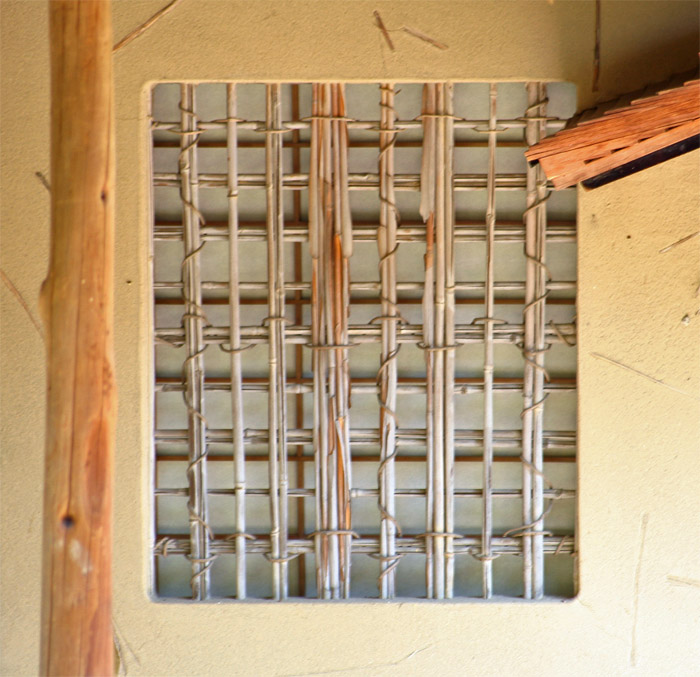
Koudaiji
Ihou'an 高台寺遺芳庵 (Kyoto)
(C)2001 Japanese Architecture and Art Net Users System. No reproduction or republication without written permission.
掲載のテキスト・写真・イラストなど、全てのコンテンツの無断複製・転載を禁じます。
|
||||||
| shitajimado 下地窓 | ||||||
|
||||||
|
||||||
|
||||||
|
||||||
| KEY WORD : architecture / tea houses | ||||||
|
||||||
| Also written 助枝窓. Also called nurisashimado 塗さし窓, nurinokoshimado 塗残し窓, kakisashimado 掻さし窓. A very large one is called ooshitajimado 大下地窓. A type of window found in tea ceremony houses. It is made to appear as if the lath for a mud plastered wall had not been plastered over, leaving open an unfinished part that is a square with rounded corners. It is a centuries-old method of window making which was adapted from a simple technique used on farmhouses. Sen Rikyuu 千利休 (1522-91) noticed such window openings in houses in the countryside and the rustic style was exactly what he sought for his tea ceremony houses. At first he used a shitajimado as a *furosakimado 風炉先窓, a low window placed opposite the host's mat *temaedatami 点前畳. In tea architecture the actual wall foundation is not really exposed. Rather the material for these windows is inserted into an opening left in the wall. Usually, unpeeled ditch-reed *shitaji 下地, is lined up vertically on the exterior and horizontally on the interior. The number of stalks varies from one to a bundle of five.. An irregular arrangement is preferred. The main intersecting points of the lath are tied with wisteria vine. Sometimes Japanese bush clover or bamboo are used as materials for the lath. The window exterior may have a hanging door *kakedo 掛戸, or a bamboo matchstick blind *sudare 簾, and on the window interior, there may have be a sliding screen *shouji 障子 or hanging shouji *kakeshouji 掛障子. Examples: Nanzenji Konchi-in Chashitsu 南禅寺金地院茶室 ; Urasenke Konnichi-an 裏千家今日庵, both in Kyoto. | ||||||
|
Koudaiji
Ihou'an 高台寺遺芳庵 (Kyoto)
|
||||||
|
||||||
|
||||||
| REFERENCES: | ||||||
| *bokusekimado 墨跡窓, *shikishimado 色紙窓, *oribemado 織部窓. | ||||||
|
||||||
|
||||||
|
||||||
| EXTERNAL LINKS: | ||||||
|
||||||
|
||||||
|
||||||
| NOTES: | ||||||
|
||||||
|
||||||
|
||||||
(C)2001 Japanese Architecture and Art Net Users System. No reproduction or republication without written permission. 掲載のテキスト・写真・イラストなど、全てのコンテンツの無断複製・転載を禁じます。 |
||||||