|
||
 |
||
 |
||
|


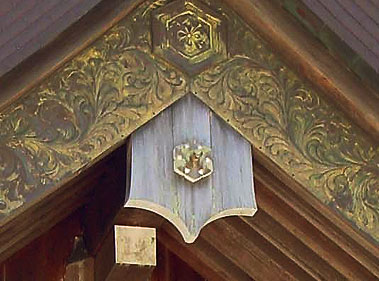
Izumo Taisha Haiden 出雲大社拝殿 (Shimane)
(C)2001 Japanese Architecture and Art Net Users System. No reproduction or republication without written permission.
掲載のテキスト・写真・イラストなど、全てのコンテンツの無断複製・転載を禁じます。
|
||||||
| umebachi gegyo 梅鉢懸魚 | ||||||
|
||||||
|
||||||
|
||||||
|
||||||
| KEY WORD : architecture / decorations | ||||||
|
||||||
| A gable pendant *gegyo 懸魚 with an irregular hexagonal shape. The lower sides of the pendant form concave curves. A hexagonal gable pendant with straight sides *kirigegyo 切懸魚. The umebachi gegyo is believed to have originated in the Heian period, and was used on domestic architecture, simple Buddhist and Shinto halls and gates. A typical example can be seen on the Kanjouinmon 潅頂印門, Touji 東寺 (17c), Kyoto. | ||||||
Izumo Taisha Haiden 出雲大社拝殿 (Shimane)
|
||||||
|
||||||
|
||||||
| REFERENCES: | ||||||
|
||||||
|
||||||
|
||||||
| EXTERNAL LINKS: | ||||||
|
||||||
|
||||||
|
||||||
| NOTES: | ||||||
|
||||||
|
||||||
|
||||||
(C)2001 Japanese Architecture and Art Net Users System. No reproduction or republication without written permission. 掲載のテキスト・写真・イラストなど、全てのコンテンツの無断複製・転載を禁じます。 |
||||||