|
||
 |
||
 |
||
|


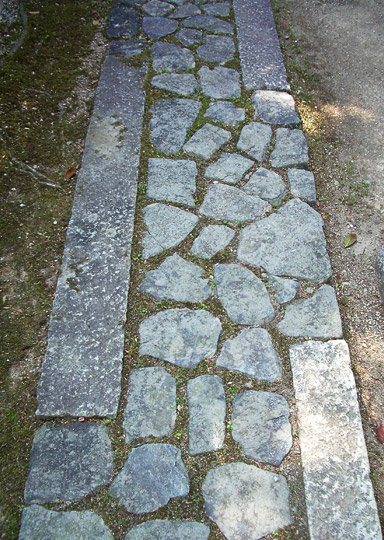
Shuuentei
Bekkan 聚遠亭別館 (Hyougo)
(C)2001 Japanese Architecture and Art Net Users System. No reproduction or republication without written permission.
掲載のテキスト・写真・イラストなど、全てのコンテンツの無断複製・転載を禁じます。
|
||||||
| nobedan 延段 | ||||||
|
||||||
|
||||||
|
||||||
|
||||||
| KEY WORD : architecture / tea houses | ||||||
|
||||||
| Also written 展段 and 展檀. A method of stone paving in the *roji 露地 or tea garden in which a large rectangular stone path is made by paving together numerous smaller stones. Nobedan may use cut-stone paving *kiri-ishijiki 切石敷, mixed-stone paving *yose-ishijiki 寄石敷, round- stone paving *tama-ishijiki 玉石敷, or a combination of these types. The characteristics of successful nobedan are given in the IKEIOSHOU SANBYAKKAJOU 怡渓和尚三百箇条 : Make long stepping stones narrow, short stepping stones wide. There are many styles. In some places they are from 72-75cm, and the narrower ones are 51- 60 cm. The joints between the different types of stones create interesting shadows, the beauty of which is a key feature of nobedan. The patterns of these joints are called *ararekoboshi 霰零し or *ararekuzushi 霰崩. The length of the nobedan should allow the tea gathering guests, usually five in number, to stand together when they are greeted by the host. Thus, the nobedan is often near the middle gate *chuumon 中門, although it may also be positioned elsewhere. | ||||||
|
Shuuentei
Bekkan 聚遠亭別館 (Hyougo)
|
||||||
|
||||||
|
||||||
| REFERENCES: | ||||||
|
||||||
|
||||||
|
||||||
| EXTERNAL LINKS: | ||||||
|
||||||
|
||||||
|
||||||
| NOTES: | ||||||
|
||||||
|
||||||
|
||||||
(C)2001 Japanese Architecture and Art Net Users System. No reproduction or republication without written permission. 掲載のテキスト・写真・イラストなど、全てのコンテンツの無断複製・転載を禁じます。 |
||||||