|
||
 |
||
 |
||
|


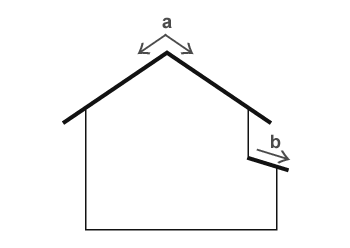
1 The flow of the roof line from the ridge *munagi 棟木, to the edge of the eaves *nokisaki 棟先. The term is usually applied to gable roofs *kirizuma yane 切妻屋根, because both the front and rear sides of the roof are identical, specifically called ryounagare 両流. *Katanagare 片流 indicates a single roof slope, for example, a pent roof, *hisashi 廂, attached below the eaves of building and extending above the veranda. Hisashi may also be placed above windows as protection againt rain seeping inside.
2 A brook made to flow through a garden. It may originate from a natural sources or may be artificially created. Sometimes a little rock island is made to divide or redirect the flow of water. A small bridge or stepping stones sawatobi-ishi 沢飛石 (swamp stepping stones) are positioned for crossing over the stream. Revetments are made of stones placed in long, tubular, open-laced bamboo, basket-like containers called jakago 蛇籠. A dry stream *karenagare 枯流, is made to symbolize a real stream by using white sand, often raked into wavy patterns, and using stone and rocks that are sometimes surrounded by moss.
(C)2001 Japanese Architecture and Art Net Users System. No reproduction or republication without written permission.
掲載のテキスト・写真・イラストなど、全てのコンテンツの無断複製・転載を禁じます。