|
||
 |
||
 |
||
|


|
Konnichi'an 今日庵 |
|
|
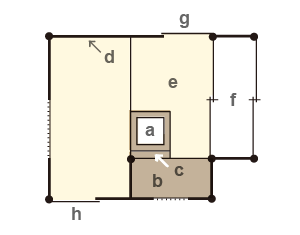
a) *ro 炉 b) mukou-ita 向板 c) *koita 小板 d) *kabedoko 壁床
e) *daimedatami 台目畳 f) *mizuya douko 水屋洞庫 g) *sadouguchi 茶道口 h) *nijiriguchi 躙口
e) *daimedatami 台目畳 f) *mizuya douko 水屋洞庫 g) *sadouguchi 茶道口 h) *nijiriguchi 躙口
|
Ihou'an 遺芳庵 |
|
|
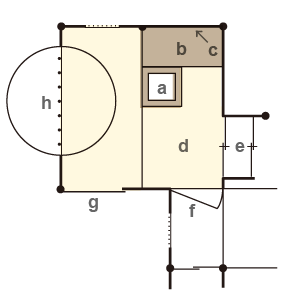
a) *ro 炉 b) mukou-ita 向板 c) *kabedoko 壁床 d) *daimedatami 台目畳
e) *mizuya douko 水屋洞庫 f) *sadouguchi 茶道口 g )*nijiriguchi 躙口 h) *marumado 円窓
e) *mizuya douko 水屋洞庫 f) *sadouguchi 茶道口 g )*nijiriguchi 躙口 h) *marumado 円窓
(C)2001 Japanese Architecture and Art Net Users System. No reproduction or republication without written permission.
掲載のテキスト・写真・イラストなど、全てのコンテンツの無断複製・転載を禁じます。